

Some people light up our world not with words, but with the simplest gestures – a wave, a smile, a kind glance through a window.
For one small town in Arlington, Washington, that light came from a 93-year-old woman lovingly known as “The Grandma in the Window.”
Every morning and afternoon, as the yellow school bus rumbled past her home, she would be there – sitting by her window, smiling, waving with her whole heart at the passing children.
And they waved back, without fail.
Every. Single. Day.
For more than five years, this quiet exchange became something magical – a moment of warmth in an ordinary routine, a bond between generations who had never met, yet felt deeply connected.
Until one day, the window was empty.
The Lady in the Window
It all began when bus driver Carol Mitzelfeldt first noticed the elderly woman waving from her home window.
It was a friendly wave – not forced, not fleeting – but warm, sincere, and familiar.
Soon, Carol’s young passengers began to notice too.
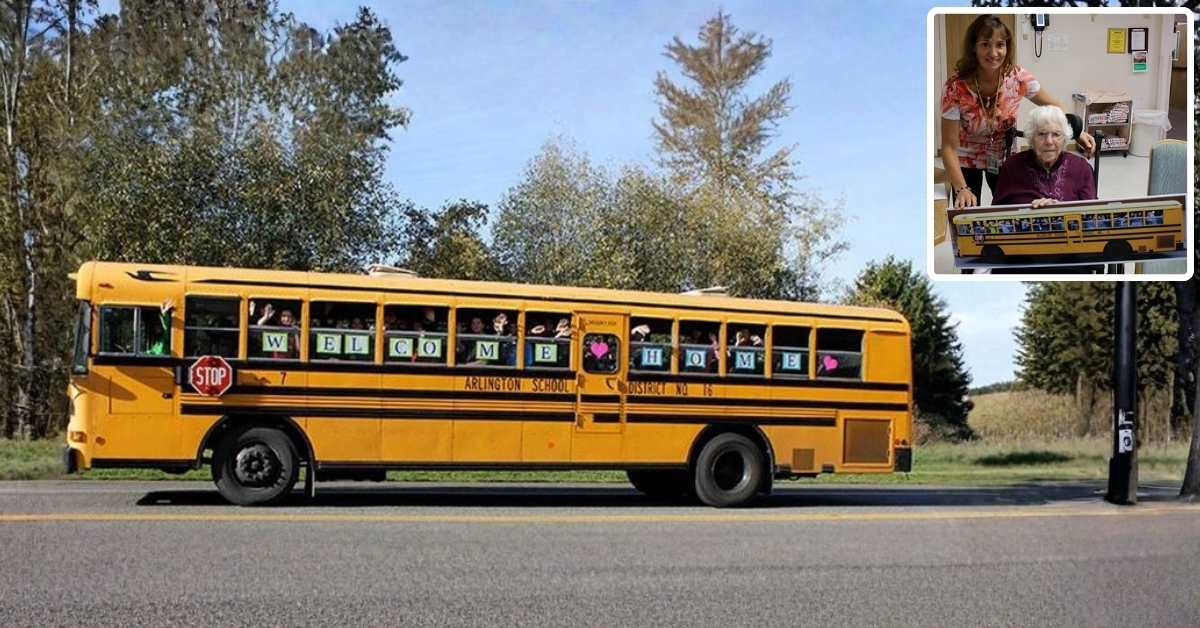
Each day, as Bus #7 rolled by, a dozen small hands pressed against the glass to wave back at their “Grandma.”
To the kids, she became a part of their day, as real and constant as the bus itself.
Her name was Louise Edlen, and for these children, she wasn’t just “some old lady in a window.”
She was their Grandma – the one who cared enough to smile, to show up, to wave, even when she didn’t have to.
What the kids didn’t know was that Louise’s wave meant just as much to her as it did to them.
After her own grandchildren grew up and moved away, her days had grown quieter. The house that once echoed with laughter now hummed softly with the passing of time.
But every morning, she had something to look forward to – that school bus full of bright, smiling faces.
Those little waves filled her days with joy.
A Morning Without a Wave
Then, one morning, something felt wrong.
As the bus turned the familiar corner, the kids leaned forward, eyes searching for their Grandma’s smiling face in the window.
But it wasn’t there.
The curtain was still. The window empty.
The bus grew quiet.
“It was kind of heartbreaking,” said seventh-grader Axtin Bandewerfhorst.
“She was always there. We didn’t know what happened.”
Driver Carol felt it too – a sudden ache, like missing a family member.
After all, Louise had been there every single day, rain or shine.
So, after finishing her route, Carol decided to check in.
She stopped by Louise’s house with a small bouquet of flowers. On the tag, she wrote:
“To the Grandma in the window – we’re thinking of you.
Love, the kids on Bus 7 and your bus driver, Carol.”
She knocked gently.
A man answered – Dave, Louise’s husband. His eyes softened when he saw the flowers.
“Louise isn’t home right now,” he said quietly.
“She had a stroke earlier this week. She’s at the rehabilitation center.”
The Kids Find Out
When Carol returned to her bus, she shared the news with her students.
Their faces fell.
Their Grandma – their daily dose of love and sunshine – was lying in a hospital bed, unable to wave back.
But kids, when given the chance, have hearts big enough to fill the world.
“The kids and I said, ‘too bad she can’t have something to look at while she’s recovering,’” Carol said later.
“So we decided to take a picture.”
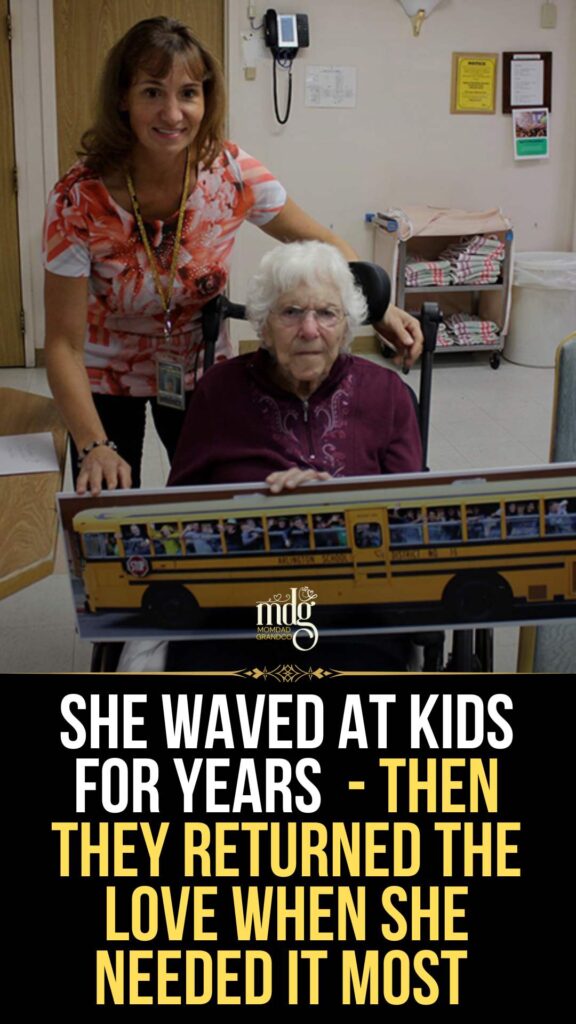
The next day, when the bus made its rounds, the children gathered together, waving from the windows as usual – this time, for a camera.
They printed the photo, enlarged it, mounted it on foam board, and signed each of their names around it.
Then Carol drove it straight to the rehab center.
When Louise saw it, her eyes filled with tears.
There, in front of her, were her kids – smiling, waving, loving her from afar.
She couldn’t be at her window, but now she had her own “window” right beside her hospital bed.
She could look at their faces every day, just as she had before.
Welcome Home, Grandma
Weeks passed. Louise began to recover. Slowly, gently, she regained her strength.
And one bright morning, she finally came home.
That day, as Bus #7 turned onto her street, the children were ready.
They held up a huge homemade sign in the bus windows:
“WELCOME HOME GRANDMA!”
As the horn honked and the kids waved wildly, tears rolled down Louise’s cheeks.
She was home again. And her kids were waiting.
A Community United by Love
What began as a small wave became something much bigger – a bond between generations, proof that love doesn’t need words to be felt deeply.
Louise and her husband Dave later told reporters that those kids made her final years “brighter than we ever imagined.”
When she couldn’t go outside, their faces came to her window.
When she was ill, their love came to her hospital room.
When she returned home, their joy filled her heart.
And for the kids? They learned something timeless – that kindness has power.
Their bus driver Carol said it best:
“I’ve told them, this could be your grandma or grandpa – or even you someday. Always treat people with kindness, and always treat people with compassion.”
The Lessons She Left Behind
The Grandma in the Window taught her little community three beautiful lessons –
- Small acts mean everything.
A wave, a smile, a moment of attention can change someone’s day – even their life. - Love travels both ways.
The joy we give to others has a way of coming back when we need it most. - Connection keeps us alive.
Even as we age, feeling seen and remembered is what keeps our hearts beating strong.
Louise didn’t have to do much – she just waved.
But in that wave was love, continuity, and a reminder that none of us are invisible.
Be Someone’s “Grandma in the Window”
Loneliness among older adults is real – and often silent.
Many seniors sit by their windows day after day, hoping for a glimpse of life, a small sign that the world still remembers them.
So next time you pass by an elderly neighbor – wave.
Smile. Say hello.
Offer to shovel snow, carry groceries, or simply ask how they’re doing.
You might become the bright spot in their day – or even their reason to smile again tomorrow.
Because the truth is simple:
Kindness never goes unnoticed.
Even a small wave can echo for years.
“It takes so little to make someone feel seen.
But it can mean the world to the one who’s watching.”
Leave a Reply