

Some people spend their retirement quietly. Others find new hobbies. But very few take something deeply personal, something the world often misunderstands, and turn it into an act of kindness that touches thousands of hearts.
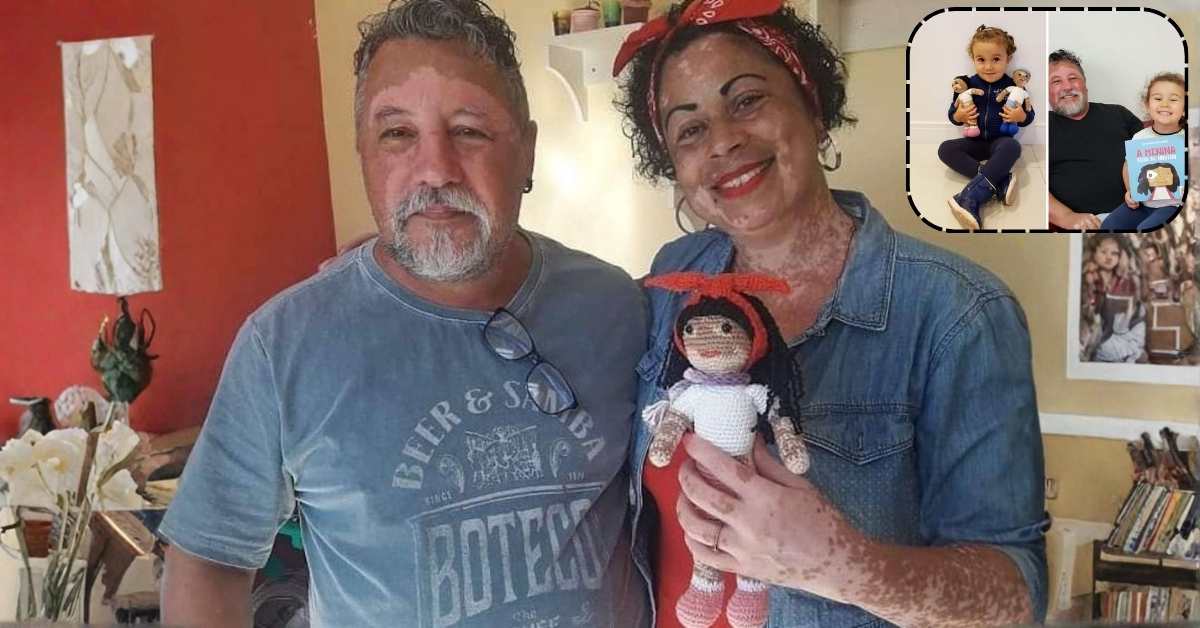
This is the story of João Stanganelli Junior, a 64-year-old Brazilian grandfather whose life changed twice – once when he developed vitiligo, and again when he decided to use his hands to spread acceptance, courage, and joy to children across the world.
This is the kind of story that reminds us of the gentleness that still exists in the world… the kind of story your momdadgrandco audience loves – full of love, healing, family, and purpose.
Living With Vitiligo – A Journey of Courage
Vitiligo affects 1–3% of the world’s population. It doesn’t hurt physically, but emotionally? It can be devastating.
People stare.
People whisper.
People judge.
Children with vitiligo often face teasing, questions, and loneliness – all because their skin loses pigment in certain patches.
But João?
He refused to let vitiligo define him.
He developed it in his 30s. First small patches… then larger ones… slowly spreading across his skin over the years.
Most people with vitiligo struggle with confidence, but João saw things differently.
He often quotes Benjamin Disraeli:
“Life is too short to be small.”
To him, vitiligo wasn’t a curse.
It wasn’t something to hide.
And it certainly wasn’t something to be ashamed of.
It was simply… part of him.
After Retirement, A New Purpose Was Born
When João retired from the gastronomy industry due to unrelated health issues, he suddenly had long, empty days… the kind that many seniors struggle with.
He needed something to keep his mind busy
and his hands active
and his spirit alive.
So he and his wife began crocheting together.
At first, his fingers hurt. His back hurt. The stitches didn’t look right. But like many great artisans, he pushed through. And soon, the rhythm of crocheting became a kind of meditation for him.
He says:
“Once your fingers get into the rhythm, it’s hard to stop.”
Crochet didn’t just become a hobby.
It became therapy.
It became healing.
It became a new purpose.
And that purpose was about to change countless young lives.
The First Doll – A Grandfather’s Gift
João’s first crochet doll was made for someone very special – his granddaughter.
But instead of making an ordinary doll, he decided to stitch something unique… something she would always remember him by.
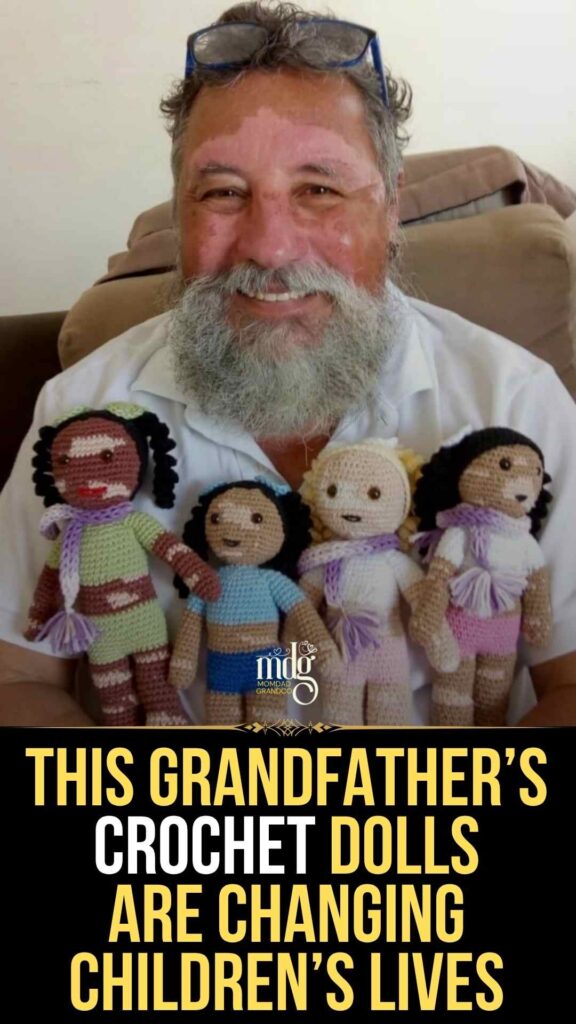
He crocheted a doll with vitiligo patches, just like the ones on his own skin.
When he showed it to her, something magical happened:
She didn’t see vitiligo.
She didn’t see “difference.”
She saw her grandpa.
She saw love.
And that’s when João understood something powerful:
Children learn to love themselves when they see themselves in the world.
Even if it is in a doll.
That small, simple idea sparked a mission.
Inclusive Dolls for Children Who Often Feel Invisible
After sharing the doll online, João received messages from parents around the world.
Parents of children with vitiligo.
Parents of children with disabilities.
Parents whose kids felt “different,” “left out,” or “not like everyone else.”
They said things like:
“My daughter has vitiligo.
I can’t wait to show her your dolls.”
“My son has dealt with many mean comments.
This means so much.”
“My child thinks she is alone.
Your dolls will help her feel seen.”
And so, João began crocheting more inclusive dolls:
✔ Dolls with vitiligo
✔ Dolls in wheelchairs
✔ Dolls with birthmarks
✔ Dolls with different skin tones
✔ Dolls with medical conditions
His goal was pure:
Help children feel normal.
Help them feel loved.
Help them feel proud of who they are.
One stitch at a time.
A Doll for a Little Girl Named Maria Luiza
One of João’s most touching moments was when he crocheted a doll for a little girl named Maria Luiza.
Her mother, author Tati Santos de Oliveira, wrote a children’s book inspired by her daughter’s vitiligo:
“A Menina Feita de Nuvens” – “The Girl Made of Clouds.”
In the story, Maria’s vitiligo spots are described as little clouds – soft, beautiful, and magical.
When João gifted them a doll with vitiligo, it became more than a toy.
It became a symbol of acceptance.
It whispered to Maria:
“You are beautiful.
You are unique.
You belong.”
Sharing His Dolls With the World
As João continued crocheting, he began posting photos of his work on Facebook and Instagram.
He didn’t expect much.
He didn’t seek fame.
He simply wanted to share kindness.
But the world noticed.
Thousands of people commented.
Parents wrote long messages of gratitude.
Adults with vitiligo thanked him for making them feel represented.
Even people without vitiligo were moved by the message of acceptance.
One person wrote:
“Your dolls will change the lives of so many kids.”
Another said:
“My daughter has this condition. She’ll feel so understood.”
The world fell in love with the man who stitched hope into yarn.
“The Spots I Have Are Beautiful”
João says something simple, yet profound:
“The spots I have are beautiful. What hurts me are the flaws in people’s characters.”
Vitiligo didn’t make him insecure.
People’s judgment did.
And so he decided to fight that judgment – not with anger, but with kindness.
With dolls.
With yarn.
With love.
And in doing so, he turned something that many people see as “different” into something beautiful and empowering.
If More People Were Like João…
The world often celebrates flawless beauty.
Perfect skin.
Perfect faces.
Perfect appearances.
But perfection has never made anyone feel loved.
Compassion has.
Representation has.
Acceptance has.
And João embodies all three.
He reminds us:
✔ That elderly people have so much love left to give
✔ That retirement can open the door to meaning and purpose
✔ That differences can be celebrated rather than hidden
✔ That one person can make hundreds of children feel seen
If more people were like João – we would have more kindness in the world, fewer children feeling alone, and more people embracing their true selves.
His story is more than heartwarming.
It’s a lesson.
A reminder.
A gift.
A Grandfather’s Hands, A Child’s Heart
João didn’t find fame through wealth or power.
He found it through simple stitches of love.
He used his hands to tell the world:
“You are beautiful just the way you are.”
And thousands of children with vitiligo – children who may have felt ashamed or confused – now hold dolls that look just like them.
Dolls that whisper:
“You belong.”
“You are special.”
“You are loved.”
This is what happens when a grandfather decides to make the world softer.
One doll at a time.
One child at a time.
One heart at a time.
Leave a Reply